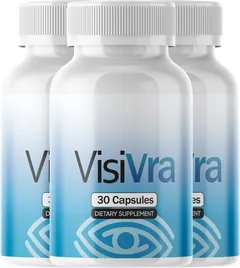
Does Visivra Work? What the Science Really Says About It
Separating ingredient evidence from product claims
There is a difference between evidence for an ingredient and evidence for a branded product. The AREDS2 study followed 4,203 people and found that lutein and zeaxanthin were a safe, effective replacement for beta-carotene in an eye formula. That tells us the ingredients matter. It does not prove that any one brand gives the same result. Visivra should be judged as a well-chosen nutrient blend, not a medical treatment.
How the ingredients act in the eye
Lutein and zeaxanthin are deposited in the macula, where they form a yellow filter against short-wavelength blue light. Researchers measure this as macular pigment optical density. Studies listed on PubMed show that supplementation can raise it over months. Astaxanthin, zinc and vitamin A support the retina in other ways, covered in our ingredient breakdown.
Who is most likely to notice a difference
- People with low intake of leafy greens and eggs
- Heavy screen users with tired, strained eyes
- Adults over 50 whose eyes are naturally aging
People who already eat a carotenoid-rich diet may notice less, because their macular pigment is already higher.
Realistic timeline
Expect little in the first two weeks. Many users describe changes in comfort between weeks 6 and 12. That is why we cover how long eye supplements take to work and why the 60-day guarantee matters: it gives you enough time to judge.
Signs it is working for you
Because eye supplements work gradually, it helps to know what to look for. Users who report benefits usually describe:
- Eyes that feel less tired at the end of a workday
- Less squinting when moving between screens and distance
- Quicker recovery after bright light or headlight glare
- More comfortable reading in the evening
Keep a simple weekly log: rate eye comfort from 1 to 10 and note screen hours. After eight weeks, compare the first two weeks with the last two. This gives you a far more honest answer than relying on memory.
Why it may not work for everyone
Several factors reduce the chance of noticing a difference:
- Already high intake. If you eat kale or spinach most days, your macular pigment may already be high.
- Inconsistent use. Skipping days slows the build-up of carotenoids.
- Taking it without fat. Carotenoids absorb poorly on an empty stomach.
- A different underlying cause. Blur from an outdated prescription, dry eye or cataracts won't respond to nutrients.
If you see no change after 60 days, the money-back guarantee lets you get your money back.
What independent research would look like
The strongest evidence for any supplement is a randomised, placebo-controlled trial of the finished product. For Visivra, the evidence comes instead from ingredient trials such as AREDS2 and the macular pigment studies indexed on PubMed. That is common for supplements, and it is why we describe the formula as plausible and research-based rather than proven. Treat any website that claims 'clinically proven to restore 20/20 vision' as a red flag, as explained in is Visivra legit.
How to give Visivra a fair test
If you decide to try Visivra, treat it like a small personal experiment so that you get a clear answer. Pick a start date and, for the week before, record three numbers every evening: how tired your eyes feel on a scale of one to ten, how many hours you spent on screens, and how comfortable night driving or reading felt. Then take one capsule every day with a meal that contains some fat, and keep the rest of your routine as steady as possible. Changing several things at once, such as getting new glasses in the same month, makes it hard to know what helped. Keep logging weekly. At around day 50, compare your first and last two weeks. If the scores are clearly better, continuing makes sense. If they are not, you still have time to use the guarantee. This approach turns a vague impression into useful information, and it works for any eye supplement, not just this one. Our how to take Visivra guide covers the daily routine in detail.
The role of expectations
Expectations shape how we perceive comfort, especially for symptoms like tired or strained eyes that rise and fall during the day. Clinical trials use placebo groups for exactly this reason. In many eye-fatigue studies, people taking placebo also report some improvement, because simply paying attention to their eyes leads them to blink more and take more breaks. This does not mean every benefit is imagined. It means it is worth comparing honestly, and it is another reason to pair a supplement with the proven habits described by the National Eye Institute. When habits and nutrition improve together, most people get the best overall result, whatever share comes from each.
Bottom line
Visivra works best as part of a routine that includes screen breaks, sunglasses, no smoking and regular dilated eye exams. If you want to try it, order through the official checkout so you are covered by the refund policy.
Frequently Asked Questions
Can Visivra restore lost vision?
No. Supplements support eye nutrition; they do not reverse damage or replace medical treatment.
Is there a clinical study on Visivra?
We are not aware of a published trial of the finished product. The evidence comes from studies of its individual ingredients.
What if Visivra does not work for me?
Request a refund within 60 days of purchase through the support contact in your order email.
Does Visivra work for floaters?
No supplement is proven to remove floaters. See our floaters guide for warning signs.
Will Visivra work if I wear contact lenses?
Yes, it works internally and doesn't interact with contacts. Dry-eye comfort tips may still help lens wearers.
Sources
- National Eye Institute: Age-Related Eye Disease Studies (AREDS/AREDS2)
- AREDS2 Research Group, JAMA 2013 (PubMed 23644932)
- PubMed: Lutein, zeaxanthin and macular pigment optical density
- National Eye Institute: Get a Dilated Eye Exam
This article is for general education and is not medical advice. Back to the Visivra official guide or see current Visivra pricing.