Visivra Reviews 2026: Does This Eye Formula Deliver?
What Visivra is and what it promises
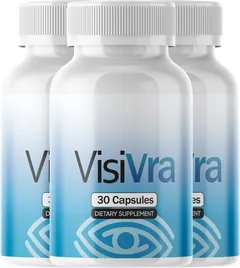
Visivra is sold as a dietary supplement for adults who want nutritional support for the macula, screen-time comfort and low-light vision. Each bottle contains 30 capsules, so one bottle lasts a month.
The brand's message is simple: give your eyes the carotenoids most diets lack. That idea is grounded in real research. The NIH AREDS2 trial showed that lutein and zeaxanthin are a safe and useful part of an eye-health formula for people at risk of macular degeneration. Visivra uses that pair as its foundation. See our full ingredient guide for each nutrient's role.
What users commonly report
Feedback on Visivra tends to fall into three groups:
- Screen workers describe eyes that feel less tired by evening after six to eight weeks.
- Adults over 55 mention more comfortable reading and less bother from headlight glare at night.
- Short-term users who stopped after a few weeks often noticed little, which is expected because macular pigment builds slowly.
That pattern matches the science: studies of macular pigment density usually measure change over months, not days.
Pros and cons
Pros
- Built on the best-studied eye carotenoids
- One capsule a day, stimulant-free
- Made in a GMP, FDA-registered US facility
- Free US shipping on 3 and 6 bottles
- 60-day refund, even on empty bottles
Cons
- Sold only online through the official checkout
- Results are gradual; no overnight change
- Not suitable as a substitute for medical treatment
Price and where to buy
Visivra costs $79 per bottle for 2 bottles, $69 per bottle for 3 bottles and $49 per bottle for 6 bottles. Our Visivra price guide breaks this down. Buy only from the official website so your order is covered by the guarantee and you avoid counterfeit copies; see where to buy Visivra.
How we evaluated Visivra
We judged Visivra the way an informed shopper would. We looked at five things: the ingredient list, how well each ingredient is supported by independent research, the quality and manufacturing claims, the buying experience, and the refund terms.
For the science we relied on government sources such as the National Eye Institute, the NIH Office of Dietary Supplements and NCCIH, not on marketing copy. For the buying experience we walked through the official checkout and noted prices, shipping charges and whether a subscription was attached. There isn't one.
We did not run a clinical trial, and no one should treat a review site as a substitute for one. What we can do is show where the formula lines up with evidence and where the evidence is thinner. Then you can decide with realistic expectations.
Ingredient quality score
- Lutein and zeaxanthin: strong evidence. These are the best-researched eye carotenoids and form the base of the AREDS2 formula.
- Astaxanthin: moderate evidence. Several small trials on eye fatigue after screen work show promise.
- Zinc and vitamin A: strong biological role. Both are essential for the retina, though most people get enough from food.
- Bilberry: limited evidence. It has a long traditional use, but controlled trials on night vision are inconsistent.
Overall, four of the six ingredients have a solid scientific rationale, which is better than many eye products that lean on exotic extracts with little research. Because exact doses vary by batch label, read the Supplement Facts panel on your bottle and compare it with the research doses in our lutein dosage guide.
Who should and shouldn't buy it
Good candidates: adults who spend most of the day on screens, people over 40 who rarely eat leafy greens, and anyone who wants one simple daily capsule instead of several separate supplements.
Better to check with a doctor first: people with diagnosed macular degeneration (who may need the exact AREDS2 doses), anyone on blood thinners, and pregnant or nursing women because of vitamin A.
Not a fit: anyone hoping to stop wearing glasses, or anyone with sudden vision changes, which need an urgent eye exam rather than a supplement. Our side effects guide covers safety in more depth.
A realistic 90-day experience
To give you a picture of what consistent use usually looks like, here is a typical timeline based on how carotenoid supplements behave in research and what users commonly describe. During the first two weeks most people notice nothing at all, and that is normal. Blood levels of lutein and zeaxanthin are rising, but the macula has not yet stored much extra pigment. Between weeks three and six, some heavy screen users say their eyes feel a little less heavy by late afternoon, especially if they have also started taking regular breaks. Between weeks six and twelve, those who respond tend to describe steadier comfort during long reading sessions and slightly quicker recovery after bright light or oncoming headlights. Others honestly feel no different. That is why we recommend writing down a simple comfort score each week instead of relying on memory, and why the 60-day guarantee matters if the product is not right for you.
Our verdict
Visivra is a sensible choice if you want a simple, broad eye-nutrition formula and are willing to take it consistently for at least 60 days. If you have a diagnosed eye condition, talk to your eye doctor first. Your doctor may recommend a specific AREDS2 dose.
Frequently Asked Questions
Are Visivra reviews real?
Look for reviews that describe gradual change over weeks and mention the official checkout. Be cautious of reviews promising instant results or selling through third-party marketplaces.
How long before Visivra works?
Most users judge it after 60 to 90 days of daily use, because lutein and zeaxanthin accumulate in the macula slowly.
Is Visivra worth it?
For adults with low leafy-green intake and heavy screen use, a lutein-based formula with a 60-day guarantee is a low-risk way to try eye nutrition support.
Do doctors recommend Visivra?
We are not aware of formal medical endorsements. Many eye doctors do recommend lutein and zeaxanthin in general, which are Visivra's core ingredients.
What is the best Visivra package for a first try?
The 3-bottle package gives you a 90-day trial with free US shipping and fits the timeline in which most users judge results.
Sources
- National Eye Institute: Age-Related Eye Disease Studies (AREDS/AREDS2)
- MedlinePlus: Lutein
- PubMed: Astaxanthin and eye fatigue research
- National Eye Institute: Get a Dilated Eye Exam
This article is for general education and is not medical advice. Back to the Visivra official guide or see current Visivra pricing.