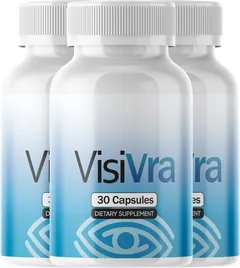
Visivra vs AREDS2 Formulas: Key Differences Explained
What is in the AREDS2 formula
According to the National Eye Institute, the AREDS2 formula contains 500 mg vitamin C, 400 IU vitamin E, 80 mg zinc, 2 mg copper, 10 mg lutein and 2 mg zeaxanthin. It reduced the risk of progression to advanced AMD by about 25% in people who already had intermediate AMD. Our AREDS2 study explainer covers the details.
How Visivra differs
- Shares the lutein and zeaxanthin foundation
- Adds astaxanthin and bilberry for screen comfort and antioxidant support
- Includes zinc and vitamin A without the very high AREDS doses
- Aimed at everyday users, screen workers and healthy aging eyes
Who should take which
If you have intermediate AMD, your eye doctor may recommend an AREDS2 product at the studied doses. The NEI notes there is no evidence the AREDS formulas prevent AMD in people who do not have it. For people without a diagnosis who want general support, a broader formula like Visivra may be more appropriate.
Side-by-side comparison
- Purpose: AREDS2 slows progression of intermediate AMD; Visivra offers general everyday eye nutrition.
- Lutein/zeaxanthin: both include them.
- High-dose vitamin C and E: AREDS2 yes; Visivra not listed.
- Zinc: AREDS2 80 mg (high); Visivra includes zinc at supplement levels.
- Astaxanthin and bilberry: Visivra only.
- Typical user: AREDS2 is for adults with diagnosed AMD; Visivra is for screen users and healthy aging eyes.
Why high-dose AREDS formulas aren't for everyone
The AREDS2 doses are far above everyday nutritional needs. Vitamin E at 400 IU and zinc at 80 mg have been well tolerated in the trial population, but they are medical-strength doses. The NEI notes that the formula was not shown to help people with no AMD or early AMD (NEI). For people without a diagnosis, lower-dose broad formulas are a more proportionate choice.
Talking to your eye doctor
Bring both labels to your next appointment and ask:
- Do I have early, intermediate or advanced AMD, or none?
- Would AREDS2 doses benefit me?
- Is it safe to combine any of these with my other medications?
This conversation takes two minutes and answers the 'which one' question better than any article. Book a dilated eye exam if you haven't had one recently.
Cost and practicality
AREDS2-style products are widely available from pharmacies and online retailers. They are usually taken as two softgels a day to deliver the full studied doses. Visivra is one capsule a day, sold only through its official website, with bundle pricing from $49 to $79 per bottle. For someone with diagnosed intermediate AMD, the AREDS2 formula is the evidence-based choice regardless of convenience, and many eye doctors recommend specific brands. For someone without AMD who wants general eye nutrition and screen-comfort support, the daily convenience and broader ingredient list of a formula like Visivra may be more appealing. The best choice depends on your diagnosis, not just on price or pill count. This is why an eye exam is the right first step.
What the science still does not know
Researchers are still studying several open questions. Can lutein and zeaxanthin started earlier in life reduce the chance of developing AMD at all? How much do additional antioxidants such as astaxanthin add for macular health, as opposed to eye fatigue? Are there genetic profiles that respond better or worse to specific nutrients? Large, long trials are expensive and take many years, so answers come slowly. In the meantime, the National Eye Institute recommends following the proven AREDS2 approach for people who meet the criteria, and healthy diet and lifestyle steps for everyone else. Visivra fits into the second group as a nutritional option, not a replacement for medical guidance.
Making your decision
To choose between an AREDS2 formula and a general eye-nutrition product such as Visivra, start with your diagnosis. If an eye doctor has found intermediate AMD, or late AMD in one eye, the AREDS2 formula at studied doses is the evidence-based choice, and you should follow that advice. If your eyes are healthy and you want support for screen comfort and overall eye nutrition, a broader everyday formula may suit you better. If you are unsure, book a dilated exam. Either way, combine supplements with a healthy diet, UV protection and no smoking. Read our AREDS2 study explainer and Visivra ingredients to compare them in detail.
Can you take both?
Taking both would double some nutrients, especially zinc. Do not combine them without your eye doctor's approval.
Frequently Asked Questions
Is Visivra an AREDS2 formula?
No. It uses the AREDS2 carotenoids but is not the AREDS2 formula.
Does AREDS2 prevent macular degeneration?
The NEI states it slows progression in people with intermediate AMD; it has not been shown to prevent AMD.
Which is cheaper?
Prices vary; Visivra is $49-$79 per bottle on the official site.
Does Visivra contain copper?
Copper is not among the six listed ingredients. Check your label.
Can I switch from AREDS2 to Visivra?
Only with your eye doctor's approval if you have AMD.
Sources
- National Eye Institute: Age-Related Eye Disease Studies (AREDS/AREDS2)
- NIH: Study provides clarity on supplements for protection against blinding eye disease
- AREDS2 Research Group, JAMA 2013 (PubMed 23644932)
- National Eye Institute: Age-Related Macular Degeneration
This article is for general education and is not medical advice. Back to the Visivra official guide or see current Visivra pricing.